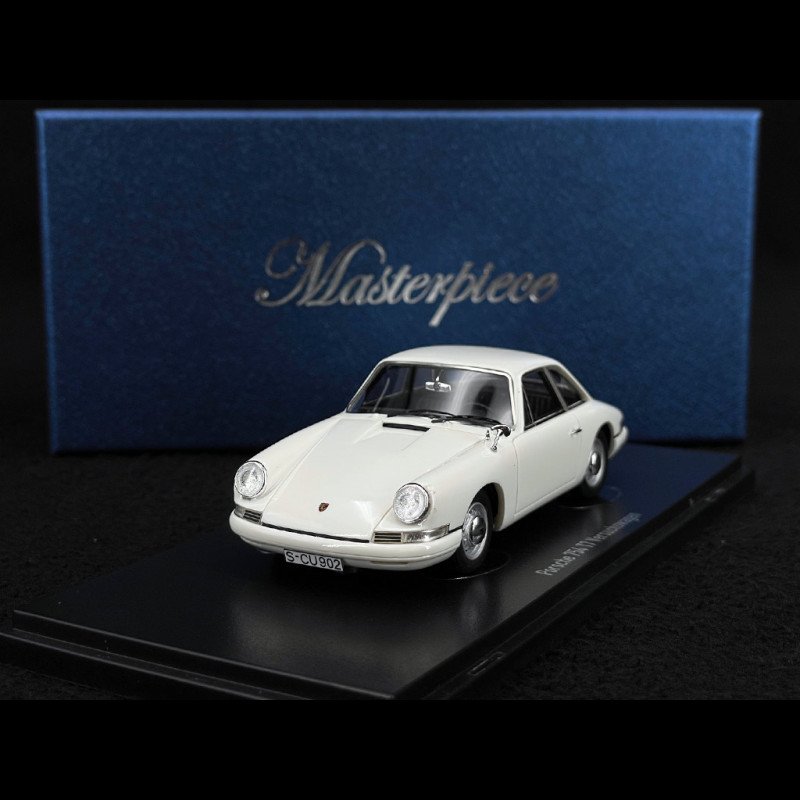
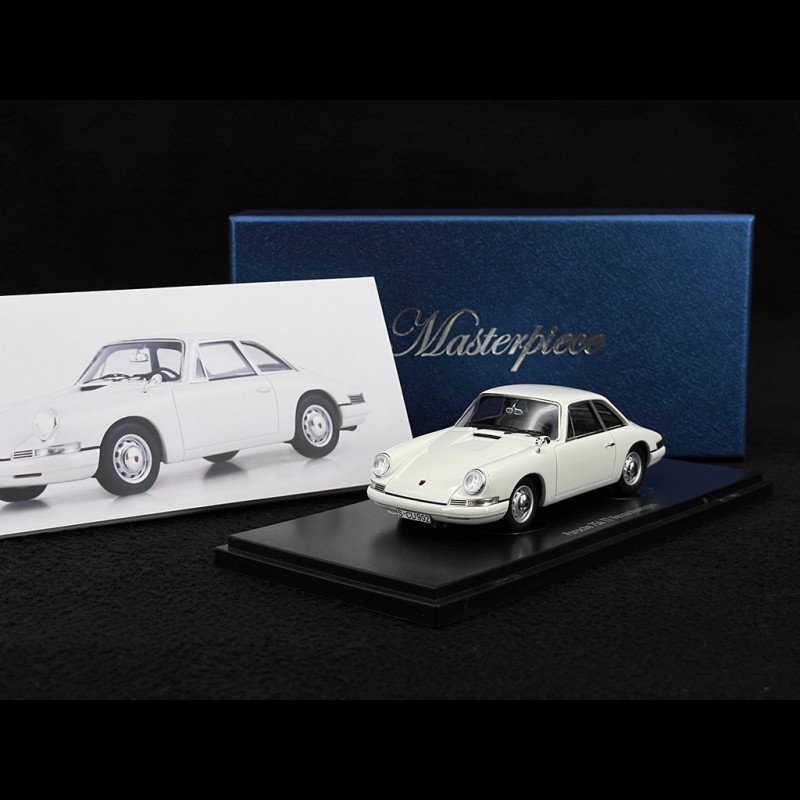
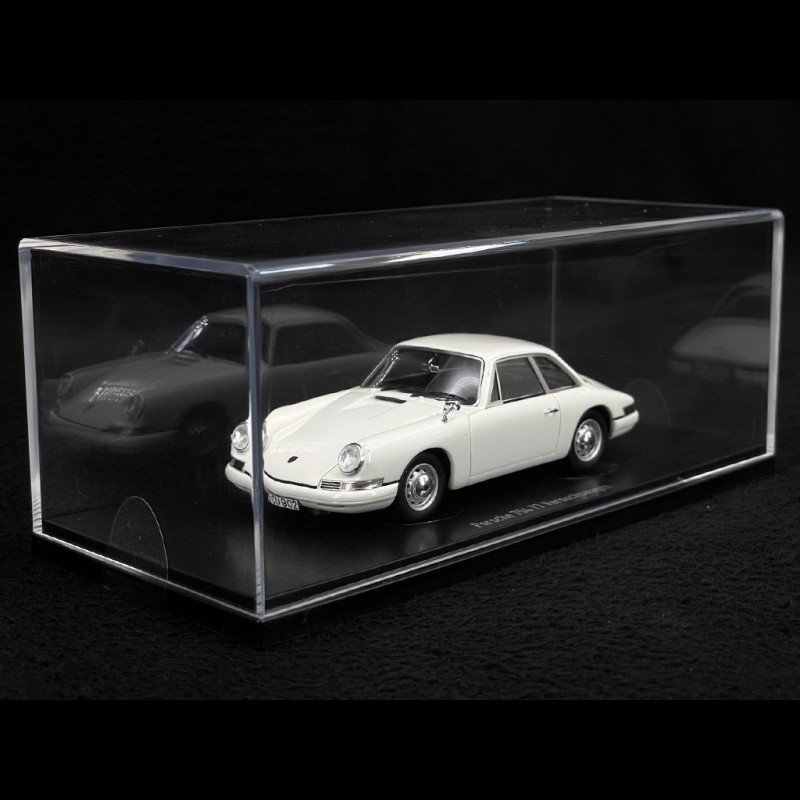


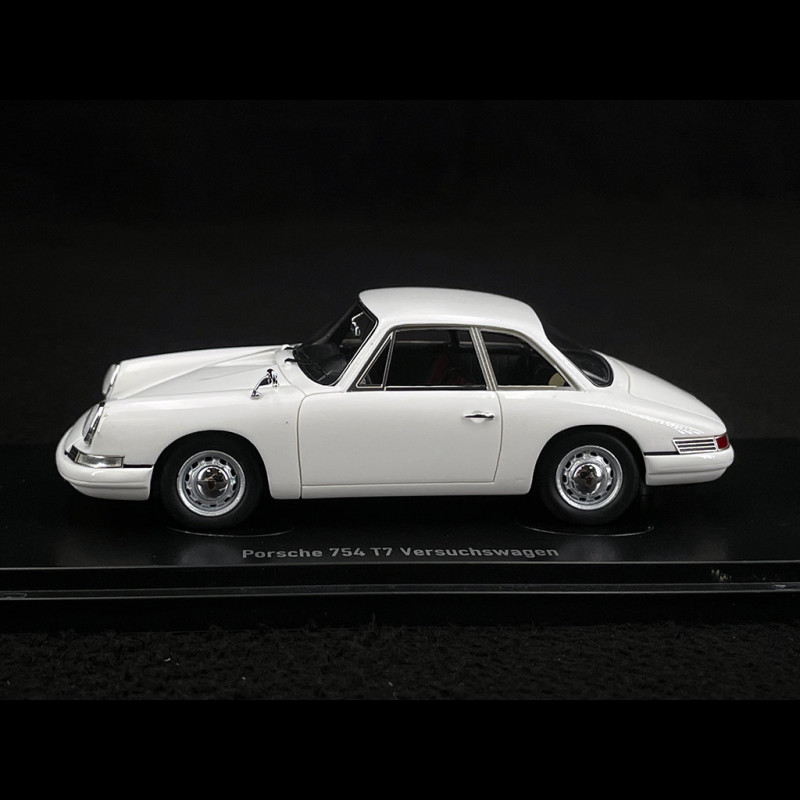




Porsche 754 T7 Prototype 901/911 Coupe 1959 1:43 Scale Diecast Model Car by AutoCult
د.أ 685.00
Shop the Porsche 754 T7 Prototype 1:43 diecast by AutoCult. White resin-cast replica of the 911’s missing link. Limited edition
1 متوفر في المخزون
A Missing Piece of Porsche History
The Porsche 754 T7 Prototype 901/911 Coupe 1959 1:43 Scale Diecast Model Car by AutoCult recreates one of the most historically significant prototypes in Porsche’s entire lineage. This model reproduces the original white finish of the real T7 prototype, capturing the car exactly as it appeared before Porsche later repainted it green for further testing. For collectors who value historical accuracy over flashy livery, this white edition offers a rare and meaningful way to own a piece of genuine automotive development history.
Unlike typical diecast releases that focus on famous production cars, this model represents something far rarer: a working prototype that shaped the design of one of the world’s most iconic sports cars. AutoCult built its reputation on exactly this kind of release, and the 754 T7 stands as one of the brand’s most historically important subjects.
This piece belongs in the collection of anyone who takes Porsche history seriously, whether you’re a dedicated marque enthusiast, a prototype and concept car collector, or simply someone fascinated by the design process behind an automotive icon.
The Real Story Behind the Porsche 754 T7
By the late 1950s, the Porsche 356 was reaching the limits of its potential. Originally developed as a derivative of the Volkswagen platform, its engine, chassis, and bodywork had little room left for further improvement. Porsche needed a genuine successor, and the development process that followed would eventually produce the 911.
Porsche’s design team explored several early concepts, including four-seater proposals, before settling on the specifications that would guide the new car. Ferry Porsche and his development team agreed on key requirements: a 2+2 seating layout, a more spacious cabin, a larger trunk, easier entry, and a rear-mounted air-cooled flat engine with improved performance over the 356.
Several well-known design houses submitted proposals for the new car’s shape, but Ferry Porsche rejected each one for not feeling authentically Porsche. The design that ultimately caught his attention came from within the family. His son, Ferdinand Alexander Porsche, known as “Butzi,” produced the drawings that would define the car’s direction. Those drawings became the basis for the Type 754 T7 prototype.
Built by Reutter, Tested on the Road
Coachbuilder Reutter constructed a functional version of the T7 prototype in 1959, based on Butzi Porsche’s design. The car first appeared in white, the same finish reproduced in this AutoCult model, before Porsche later repainted it green for continued testing. The T7 took its first test drives in November 1960, allowing Porsche’s engineers to evaluate its chassis and road behavior ahead of further development.
Under the bonnet, the T7 carried a four-cylinder engine sourced from the 356 Carrera 2, producing roughly 130 horsepower in this application. That output pushed the prototype to a top speed of around 120 miles per hour, though Porsche ultimately determined that this motorsport-derived engine was too highly strung for practical road use in the eventual production car.
Visually, the T7 set the design language that would define the 911 for decades to come. Its flat front nose, protruding headlights integrated into the front fenders, and expansive glasshouse all carried through directly into the production 901 and later 911. Placed side by side with an early 901, the family resemblance between the two cars is unmistakable.
The Key Difference That Shaped the 911
While the T7 heavily influenced the 911’s design, one major difference separated the two cars. The T7 featured a distinctive notchback body style, specifically designed to maximize rear-seat headroom for genuine four-seat practicality. Ferry Porsche, however, insisted that the eventual 356 successor needed a true coupe profile rather than a notchback silhouette.
That decision ultimately shaped the production 901, introduced in 1963, which sacrificed some rear-seat practicality in favor of a sportier, more sloped roofline. Butzi Porsche, the same designer behind the T7, also penned the 901’s final design, creating a direct design lineage from prototype to production car.
Though it never reached production itself, the Porsche 754 T7 holds a place of honor in Porsche’s own museum today, recognized as a vital contributor to the story of the world’s most famous sports car.
AutoCult’s Craftsmanship Brings the Story to Life
AutoCult specializes in reproducing exactly this kind of historically significant but often overlooked vehicle, and the 754 T7 fits perfectly within that mission. As a resin-cast model built in 1:43 scale, this piece reflects the careful research and attention to detail that defines AutoCult’s approach to model production.
Every panel line, headlight placement, and body contour on this model reflects the real T7 prototype’s proportions. The white finish reproduces the car’s original, pre-repaint appearance, offering collectors a version of this historic vehicle that many enthusiasts have never seen represented in scale model form. Fine details include:
- Accurately scaled body proportions matching the original T7 prototype
- Faithfully reproduced front fender headlight placement and flat nose design
- Detailed glasshouse and cabin structure reflecting the car’s four-seat intent
- Correctly scaled wheels and trim consistent with late-1950s Porsche design
- A finish that reflects the T7’s original white livery, prior to its later green repaint
Why 1:43 Scale Suits This Historic Prototype
AutoCult’s choice of 1:43 scale for the T7 reflects the brand’s broader approach to prototype and historical vehicle reproduction. This scale allows for a compact, display-friendly model that still captures meaningful design detail, without requiring the display footprint of larger 1:18 releases.
For collectors building a broader collection of Porsche prototypes, concept vehicles, or historically significant models, 1:43 scale also makes it easier to display multiple pieces together, creating a more complete visual timeline of the marque’s design evolution from the 356 through the 901 and into the modern 911 lineage.
A Rare Find for Serious Collectors
As with all AutoCult releases, this model reflects the brand’s commitment to limited, numbered production runs, making each piece a genuinely scarce item rather than a mass-produced collectible. For Porsche enthusiasts and prototype collectors alike, that combination of historical significance and production rarity makes this model an especially compelling addition to any serious collection.
Whether you’re drawn to the T7 for its role in shaping the 911’s design, its connection to Ferdinand Alexander Porsche’s early work, or simply its rarity as a piece of automotive development history, this model delivers genuine collector value well beyond typical diecast releases.
A Meaningful Addition to Any Porsche Collection
The Porsche 754 T7 Prototype 901/911 Coupe 1959 1:43 Scale Diecast Model Car by AutoCult offers collectors far more than a simple model car. It represents a foundational chapter in Porsche’s design history, reproduced with the historical accuracy and craftsmanship that AutoCult is known for across its prototype and forgotten-vehicle lineup.
Whether displayed alongside other Porsche models, positioned as the centerpiece of a prototype collection, or gifted to a dedicated Porsche historian, this model delivers lasting value grounded in genuine automotive significance. For collectors who appreciate the story behind the car as much as the car itself, this white edition of the 754 T7 stands as an essential piece of Porsche’s evolutionary history, scaled down without losing any of its historical weight.
| Size | 1/43 |
|---|---|
| Manufacturer | AutoCult |
| Color | White |